Recycling and Sustainability — House Clearance Plaistow
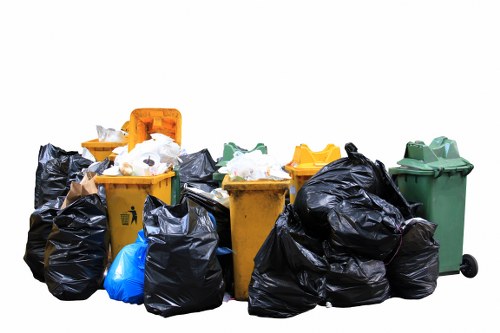 House Clearance Plaistow is committed to delivering an eco-friendly waste disposal area approach that benefits residents, the local environment and borough services. Whether you need a full flat clearance or a single-room tidy up, our Plaistow house clearance services prioritise reuse and recycling at every stage. We work to reduce landfill dependency by sorting materials on-site where possible and diverting salvageable items to reuse streams. Our approach supports local policies on separation of waste and helps neighbourhoods meet wider sustainability goals.
How our sustainable rubbish area process works
We follow a clear process for every house clearance in Plaistow: assessment, segregation, transport and onward processing. At assessment we identify items suitable for donation or refurbishment; during segregation we separate metals, wood, WEEE (electricals), textiles, paper & card, glass and residual waste. The vehicles we use are designed to keep recyclable materials clean and dry to maximise recovery rates. Strong segregation on site means fewer contaminants and higher quality recyclable loads sent to authorised facilities.
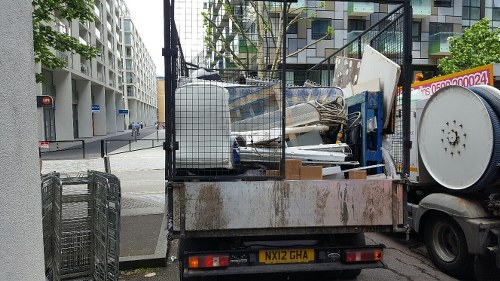 Our house clearance in Plaistow respects the borough's approach to waste separation — residents here are familiar with distinct streams for paper and card, mixed recycling, food waste and glass — so we align our on-site sorting to match local expectations and increase reuse opportunities. By mirroring borough separation systems we make it straightforward for transfer stations and recycling partners to process materials efficiently, increasing the overall recovery rate for each clearance.
Recycling percentage target and reporting
We have set a clear recycling percentage target: 80% recycling and reuse of all recoverable material from house clearances in Plaistow within the next two years. This target covers diversion to reuse schemes, donations to charities, and delivery to municipal recycling facilities rather than landfill. Progress is tracked per job so we can report percentage recovery, identify common contamination issues and improve sorting practices. Our aim is ambitious but realistic — we continually refine workflows to move from a traditional waste service to a full circular approach.
 Local transfer stations are a key part of delivering a low-impact Plaistow house clearance. We consolidate loads and route them to authorised transfer centres that serve Newham and surrounding boroughs, including municipal transfer hubs such as the Beckton transfer facility and other licensed waste transfer sites. These facilities accept segregated streams and redirect materials to specialist processors for recycling, composting or energy recovery. Working with approved transfer stations reduces double-handling and ensures transparency in material destination.
Our partnerships with social enterprises and charities form another pillar of the sustainable rubbish area model. Items still in good condition — furniture, clothing, books, appliances that meet safety standards — are offered to local community organisations and national charities (for example, furniture banks and registered re-use networks). These partnerships extend the life of items, support vulnerable residents and lower the carbon footprint associated with producing new goods.
Key recycling activities we routinely carry out in Plaistow include:
- Furniture reuse — assessment, repair and donation to charities or community reuse centres
- WEEE recycling — safe removal of electrical goods to authorised WEEE processors
- Textiles and books — redirected to charitable re-use or textile recycling routes
- Construction waste — timber, metal and inert materials recovered to recycling or aggregate reuse
- Glass, paper & card — separated to match borough kerbside recycling streams
These activities are designed to complement Newham and neighbouring councils' collection systems — by pre-sorting at the clearance site we increase the value and recyclability of the material we deliver to municipal and commercial processors.
 For logistics we invest in a low-carbon fleet: a growing number of electric vans and hybrid vehicles, combined with route optimisation software, reduces emissions across our Plaistow house clearance operations. Where EVs are not yet practical for specific tasks we use low-emission alternatives and employ fuel-efficient driving practices. Our long-term plan is a transition to a fully electric light-vehicle fleet for local clearances, lowering air pollution and supporting London’s carbon reduction commitments.
 Collaboration is at the heart of sustainable rubbish area delivery. We have formal agreements with local transfer stations, registered recycling processors and charity partners to ensure responsible destinations for reusable and recyclable items. By aligning house clearance Plaistow services with borough-level waste separation rules and using certified routes for hazardous items and WEEE, we maintain regulatory compliance and contribute to circular economy objectives. Every clearance is treated as an opportunity to recover value and reduce environmental impact.
In summary, our Plaistow house clearance services create an eco-friendly waste disposal area model combining ambitious recycling targets, strong partnerships, careful on-site segregation and low-carbon transport. Whether managing a small flat clearance or a larger estate tidy-up, we emphasise reuse, donate good condition items to charities, and route recyclable materials to authorised local transfer stations to keep more resources in circulation and less in landfill. This integrated approach supports local sustainability goals and delivers measurable reductions in waste and emissions.